Fundamentals of Packet Communication
Basics of Packet Communication
Introduction
Packet communication is a method of transmitting data in which the information is broken down into smaller, manageable packets before being sent over a network. This section introduces the fundamental concepts of packet communication, detailing its operation, advantages, and how it underpins the functionality of modern digital networks, including 5G.
Understanding Packet Communication
Packet communication involves several key processes, from packet formation to routing and delivery. Understanding these processes is essential for grasping the efficiency and reliability of digital networks.
Packet Formation: Data, whether it’s voice, video, or text, is segmented into packets. Each packet contains a payload (the actual data) and header information, which includes metadata such as source and destination addresses, sequence numbers, and error-checking data.
Transmission: Packets are sent over the network via various transmission mediums (fiber optics, wireless, etc.), utilizing multiple paths if available, to optimize speed and reduce congestion.
Routing: Each packet is independently routed through the network, using routers and switches, based on its header information. Dynamic routing protocols ensure packets take the most efficient path to their destination.
Reassembly: Upon reaching their destination, packets are reassembled in the correct order, based on their sequence numbers, to recreate the original message.
Advantages of Packet Communication
Packet communication offers several advantages over traditional circuit-switched communication methods, particularly in terms of flexibility, efficiency, and scalability.
Efficiency: By breaking down data into packets, networks can transmit information more efficiently, using available bandwidth more effectively and reducing transmission costs.
Reliability: Packet switching allows for dynamic rerouting around congested areas or in case of link failures, enhancing the reliability of data transmission.
Scalability: Packet-based networks can easily scale to accommodate growing amounts of data traffic, making them well-suited for the expanding needs of modern telecommunications.
Packet Communication in 5G Networks
5G networks leverage the advantages of packet communication to support a wide array of services and applications, from high-speed mobile internet to IoT connectivity.
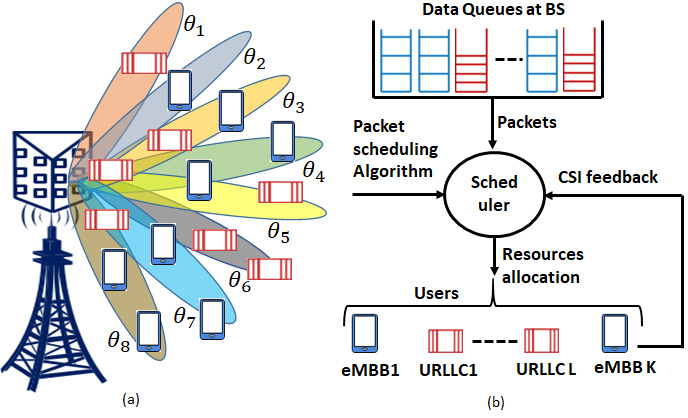
Packet communication in 5G networks
Enhanced Mobile Broadband (eMBB): Utilizes packet communication to deliver high data rates for streaming, gaming, and other bandwidth-intensive applications.
Ultra-Reliable Low-Latency Communications (URLLC): Employs packet switching to minimize delays and ensure reliable, real-time communication for critical applications, such as autonomous vehicles and telemedicine.
Massive Machine-Type Communications (mMTC): Supports the connectivity of a vast number of IoT devices, using packet communication to efficiently handle small, sporadic data transmissions.
Packet Switching vs. Circuit Switching
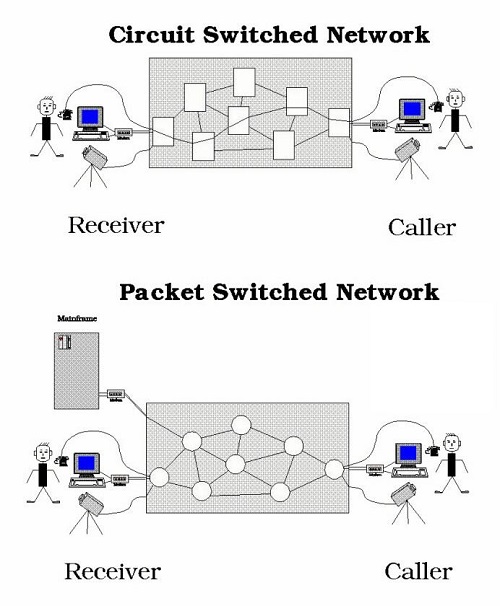
Circuit Switching vs Packet Switching
Packet communication relies on the principle of packet switching, a contrast to the traditional circuit-switching method used in early telecommunication systems.
Packet Switching: Data is divided into packets that are routed independently across the network. This method allows for dynamic routing, efficient bandwidth utilization, and better fault tolerance, making it ideal for data and Internet communications.
Circuit Switching: Establishes a dedicated communication path between two endpoints for the duration of the session. While suitable for constant-rate voice communications, it is less efficient for the bursty nature of data transmission.
Challenges and Considerations
Implementing packet communication in 5G networks presents unique challenges, including maintaining low latency, ensuring security, and managing network resources effectively. Addressing these challenges requires continuous innovation in network protocols, routing algorithms, and quality of service (QoS) management strategies.
Structure and Components of 5G Packets
Introduction to 5G Packet Structure
5G networks utilize a sophisticated packet structure to enable high-speed, reliable, and efficient data transmission. This section delves into the intricate details of 5G packet architecture, focusing on headers, payloads, and trailers, which are essential for routing, data integrity, and quality of service (QoS) management.
Understanding 5G Packet Anatomy
A 5G packet is primarily composed of three main components: the Header, the Payload, and the Trailer. Each component plays a crucial role in the packet’s journey from source to destination.
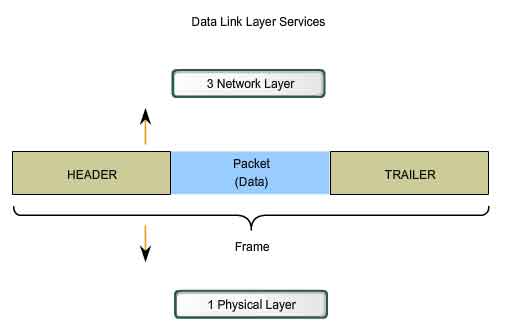
5G packets
Headers in 5G Packets
The header of a 5G packet contains essential information required for the correct routing and delivery of the packet. It includes the following elements:
Source and Destination Addresses: Identifies the sending and receiving entities.
Sequence Number: Ensures packets are reassembled in the correct order.
Packet Length: Indicates the total size of the packet, including header, payload, and trailer.
Protocol Type: Defines the type of data contained in the payload (e.g., voice, video, text).
Quality of Service (QoS) Parameters: Specifies the priority and handling instructions for the packet to ensure service quality.
Component |
Description |
|---|---|
Source Address |
The origin identifier of the packet. |
Destination Address |
The intended recipient identifier of the packet. |
Sequence Number |
Ensures correct packet ordering. |
Packet Length |
Total size of the packet. |
Protocol Type |
Type of data (voice, video, etc.). |
QoS Parameters |
Instructions for handling and priority. |
Payloads in 5G Packets
The payload is the actual data being transmitted. In 5G networks, payloads must be efficiently managed to support diverse data types and services:
Data Types: Can include multimedia (voice, video), text, or machine-to-machine (M2M) communication data.
Encoding and Compression: Techniques to prepare data for transmission, ensuring efficiency and integrity.
Error Correction Codes (ECC): Such as LDPC and Polar codes, enhance data reliability during transmission.
Aspect |
Description |
|---|---|
Data Types |
Varied (multimedia, text, M2M). |
Encoding |
Preparation of data for efficient transmission. |
Error Correction |
Techniques like LDPC and Polar codes for data integrity. |
Trailers in 5G Packets
The trailer ensures the integrity and correct reception of the packet:
Cyclic Redundancy Check (CRC): A crucial error-detection mechanism that helps identify data corruption.
Error Correction: Although primarily detected, some trailers may include information for error correction.
Trailer Length: Can vary depending on the protocols and technologies employed.
Component |
Description |
|---|---|
CRC |
Validates the integrity of the received data. |
Error Correction |
May include error correction codes for data recovery. |
Trailer Length |
Varies based on protocol and technology used. |
Conclusion
The structure of 5G packets is foundational to the network’s ability to deliver diverse, high-quality services efficiently and reliably. By understanding the components and functions of the 5G packet, network professionals can better design,
Role of Packet Communication in 5G
Introduction to Packet Communication in 5G
Packet communication stands as the backbone of 5G networks, facilitating the high-speed, reliable transmission of data required by modern telecommunications. This section outlines the critical role of packet communication in 5G, highlighting its contribution to efficiency, scalability, and service diversity.
Essential Functions of Packet Communication in 5G
5G networks rely on packet communication to support a wide array of applications, ranging from high-definition video streaming to autonomous driving and the Internet of Things (IoT). Key functions include:
Data Segmentation and Reassembly: Breaking down large data sets into manageable packets for transmission and reassembling them at the destination.
Dynamic Routing: Efficiently directing packets through the network to their destination using the shortest available path.
Error Detection and Correction: Identifying and correcting errors that occur during transmission to ensure data integrity.
Quality of Service (QoS) Management: Prioritizing traffic to meet the diverse requirements of different applications, from low-latency to high-bandwidth.
Function |
Description |
|---|---|
Data Segmentation and Reassembly |
Facilitates the handling of large data sets by breaking them into smaller packets for efficient transmission. |
Dynamic Routing |
Ensures packets are sent through the most efficient paths within the network. |
Error Detection and Correction |
Maintains data integrity by identifying and correcting errors in transmission. |
Quality of Service Management |
Prioritizes different types of network traffic to meet varying service requirements. |
Impact of Packet Communication on 5G Technologies
The implementation of packet communication profoundly influences the performance and capabilities of 5G technologies:
Enhanced Mobile Broadband (eMBB): Relies on packet communication for high-speed data transfer, enabling applications such as VR and 4K video streaming.
Ultra-Reliable Low-Latency Communications (URLLC): Utilizes packet communication to achieve low latency and high reliability, critical for applications like autonomous driving and industrial automation.
Massive Machine-Type Communications (mMTC): Supports the connectivity of a vast number of devices through efficient packet handling, essential for IoT ecosystems.
Challenges and Solutions in 5G Packet Communication
While packet communication enhances 5G capabilities, it also presents unique challenges:
Network Congestion: Managing data traffic to prevent delays and packet loss.
Security: Ensuring the integrity and confidentiality of transmitted data.
Interoperability: Facilitating seamless communication across diverse networks and devices.
Addressing these challenges is essential for maximizing the efficiency and reliability of 5G packet communication.
Conclusion
Packet communication is indispensable to the functioning and evolution of 5G networks. Its role in enabling high-speed, reliable, and versatile communications paves the way for the next generation of digital services and technologies. Understanding and addressing the challenges of packet communication will be crucial for the continued development and success of 5G networks.