How OpenAirInterface (OAI) Works and Its Advantages/Disadvantages
How Does OAI Work?
OpenAirInterface (OAI) is an open-source platform providing a software-based implementation of the 3GPP protocol stack for the Radio Access Network (RAN) and the Core Network. OAI’s flexibility makes it a powerful tool for building and testing 4G LTE and 5G systems.
Components of OAI
Radio Access Network (RAN)
- 5G RAN Project:
Develops a 5G software stack for both Non-Stand-Alone (NSA) and Stand-Alone (SA) modes, including gNodeB and UE functionalities.
- Simulation Frameworks:
Includes L1-simulation (RF simulator replaces the radio board) and L2-simulation (connects OAI UE with OAI xNB via nFAPI).
- CU/DU Split:
Supports control plane and user plane traffic management in 5G SA mode using the OAI RFsimulator.
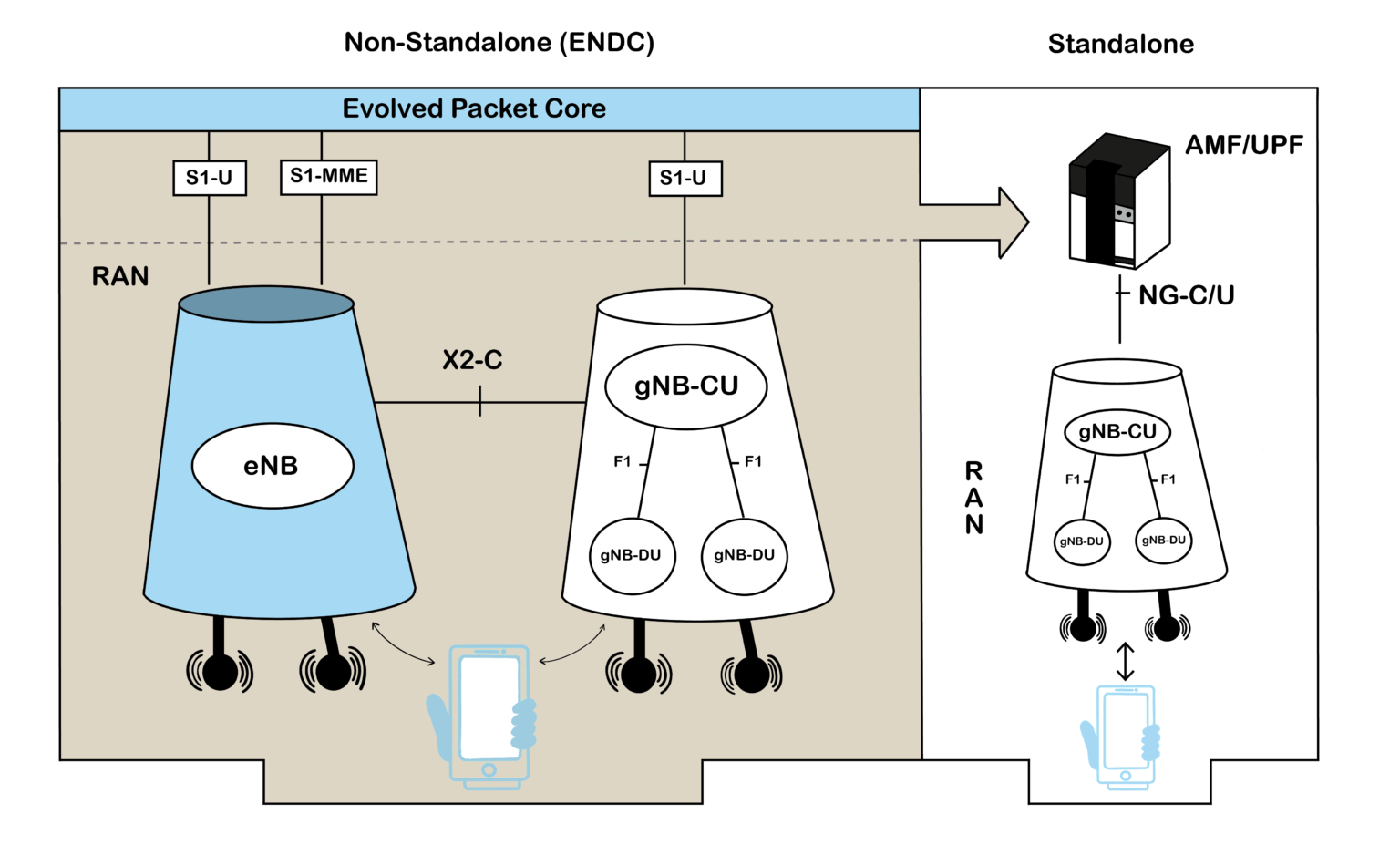
Core Network
- 5G Core Network (CN):
Provides a 3GPP-Compliant 5G SA Core Network implementation supporting a service-oriented architecture (SBA) with functions like AMF, SMF, UPF, NRF, AUSF, UDM, UDR, and NSSF.
- Deployment Modes:
Adapts to various use-case scenarios with different deployment options for the User Plane.
Docker-Based Deployment Overview
Flavor |
Description |
|---|---|
Minimalist Functional Core Network (MFCN) |
A streamlined setup for basic functional testing. |
Basic Functional Core Network (BFCN) |
A more comprehensive setup including additional features for extended testing and integration. |
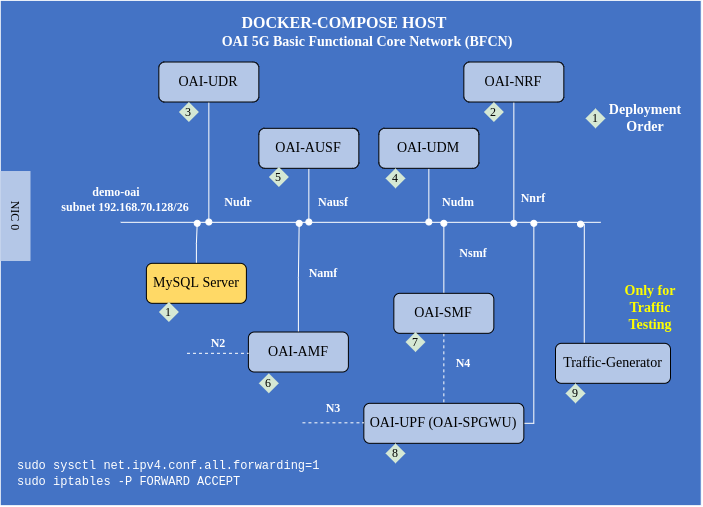
Research Support: Rich development environment with tools for emulation, monitoring, debugging, and performance analysis.
Standards Alignment: Ensures compatibility with the latest industry standards.
Community Support: Benefits from a global community of developers and researchers.
Flexibility: Supports a wide range of development projects across 4G and 5G technologies.
Open Source: Promotes transparency and collaboration in wireless technology innovation.
Disadvantages of OAI
Despite its advantages, OAI faces several challenges:
Complexity: The full implementation of the 3GPP stack can be daunting for newcomers.
Hardware Requirements: Specific hardware is needed, which may limit deployment scenarios.
Open Source Challenges: Potential for inconsistencies and compatibility issues due to the open nature of the project.
Licensing: Commercial use requires navigating a patent declaration system.
Integration: May require significant effort to integrate with existing network infrastructures.
Conclusion
While OpenAirInterface offers a robust platform for developing and testing mobile networks, it requires careful management and understanding to leverage its full potential effectively. The advantages generally outweigh the disadvantages, especially for academic and research-focused applications.